
Daisy and the
Cypress Gate
God’s Creatures, Entrusted to Our Care

God also said: let the waters bring forth the creeping creature having life, and the fowl that may fly over the earth under the firmament of heaven. And God created the great whales, and every living and moving creature which the waters brought forth, according to their kinds, and every winged fowl according to its kind, and God saw that it was good. And God said: let the earth bring forth the living creature in its kind, cattle and creeping things, and beasts of the earth, according to their kinds, and God saw that it was good. And He said: let us make man to our image and likeness, and let him have dominion over the fishes of the sea, and the fowls of the air, and the beasts, and the whole earth, and every creeping creature that moveth upon the earth. And the Lord God took man, and put him into the paradise of pleasure, to dress it, and to keep it. This is our charge as stewards: to care for the creatures of the sea and of the land as God Himself cares for what He made.
Drawn from Genesis 1:20–26 and 2:15.
Welcome to Cypress Field

At the edge of a growing Florida town stood ten acres called Cypress Field. New roads and homes moved closer each year. Still, the pasture opened beneath a wide blue sky.
Daisy lived there with her grandfather Gabriel and Captain, a Border Collie. Captain could read a hand signal from across the field. Daisy loved the farm. Her Grandfather taught her that living on a farm also meant tending to daily chores.
The Brass Key

One morning, Grandfather placed an old brass key in Daisy’s hand. “This opens the cypress gate,” he said. “But owning land is more than holding a key.”
He explained that ownership brings both freedom and duty. Fences must be safe. Animals need clean water, good food, shelter, training, and medical care. A responsible owner pays attention every day.
Stewardship in Action

Daisy saw stewardship as a promise made before God. The land was a gift to care for, not something to waste. The animals were living creatures that depended on the family.
Daisy learned to check water, watch for signs of illness, and call an adult when something seemed wrong. Kindness did not mean that ownership was wrong. Kindness meant becoming worthy of the animals in her care.
The Orange Notice

A bright orange notice appeared on the gate before a summer storm. The county was considering a new ordinance. An ordinance is a law made by a city or county.
The proposal began after complaints about one of the neighbors who neglected their property and their livestock. Yet its words reached much farther. The political winds of change were being driven by special interest groups, private equity corporations and non governmental organizations employing an army of paid activists who were influencing local governments to force their will and hidden financial agenda on hard working families farmers and ranchers to stop centuries of family owned livestock and animal breeding on many homes and privately owned farms, including Cypress Field.
Daisy understood the problem. A rule aimed at harm should not treat responsible families as if they are guilty for the bad conduct of others and accuse the innocent of wrongdoing.
Power Hiding Behind the Rules
“Can they take the animals?” Daisy asked.
“Government has important powers,” Grandfather said. “But those powers have legal limits. The answer depends on the facts and the law. It also depends on what the government plans to do.”
He told Daisy what responsible adults should do. Read the notice. Learn the deadline. Save records and gather documentation, photos and videos that can be handed to their family lawyer. Ask respectful questions. Get an attorney experienced in fighting government overreach. Never threaten anyone, hide an animal, destroy evidence, or block a government agent.
A serious claim deserves careful attention. It does not erase the right to give an answer. Calm action protects people, animals, and the truth.
At the Gate

When a county officer arrived, Grandfather stayed calm and polite. He asked for the officer’s name, agency, purpose, and written authority. He took careful notes.
Grandfather did not guess. He did not argue at the gate. He did not give up a right he did not understand. He said he would review the papers and speak with counsel.
Evidence Has a Memory

That evening, Daisy and Grandfather made a truthful record. They gathered the property map, veterinary reports, photographs, feed receipts, training notes, and dates of inspections.
Evidence is information that helps show what happened or what is true. Good records do not guarantee a result. However, high quality evidence is what can help a lawyer, official, or court understand the facts.
Daisy wrote a simple timeline. Each date connected one event to the next. Rumors could change, but a careful record helped the family document the same truthful events every time.
What Due Process Means
The family’s lawyer rendered a hard phrase in plain words. Due process means the government must keep to fair and lawful steps before it may touch a person’s life, liberty, or property. It is the system of checks and balances the founders of our American republic raised up as a shield against monarchical tyranny and abuses associated with European rule.
The steps may include written notice, time to respond, a fair decision maker, and review by a court. The exact steps depend on the law and the facts.
A warrant, an emergency, a license, a zoning dispute, and an animal cruelty investigation are not the same. Different rules may apply. That is why people should not rely on guesses or slogans.
Before the Hearing

The public hearing came on a bright morning. Daisy and Grandfather first stopped at the small chapel near the orange grove.
They did not pray for power over people who disagreed with them. They prayed for truth, justice, and the American way. Truth without pride, courage without anger, and justice joined with mercy.
Then they reviewed their notes one more time. Daisy knew that respectful speech would help others listen. She also knew that courage sometimes meant speaking up for truth in the face of adversity, even before a skeptical audience of activists and elected county representatives.
The County Room

Supporters of the proposal spoke first. They described real cases of neglect. Daisy listened. Cruelty was wrong, and responsible owners did not defend it.
Next, the family’s lawyer explained how the proposal reached beyond neglect. Its broad words could punish careful owners, working animals, and lawful farms, because the true agenda of those using animals to advance their financial interests was disguised from the general public, the decision makers, and the elected officials in power.
When Daisy’s name was called, she walked to the lectern knowing that God and her family was with her to support her right to speak the truth. She looked at the commissioners and began to speak.
Daisy Speaks
“Captain is not a pawn for activists with a hidden financial agenda to gain power over others, create food insecurity and famine, and seize the fruits of labor and land from American working families. Captain and all our farm animals are living creatures who depend on us just as we depend on them.”
“Our calf needs care every morning. Where animals are truly treated cruelly, we should all agree the cruelty must stop. But do not call every animal owner cruel to excuse the government’s power to seize land and animals under threat of arrest and armed violence. And do not call every farm or farmer a problem when the real agenda is predatory corporations imposing unfair rules on family farms to tilt the playing field in their favor.”
The room became quiet. Daisy had not insulted anyone. She had simply named the difference the proposal ignored.
Her words were simple because her point was clear: good laws can protect animals while respecting responsible families and lawful property. In that moment, her parents knew their sacrifices, and their choice to homeschool Daisy, had paid off in the face of collectivism and adversity.
A Fairer Rule
The commissioners postponed the vote and studied the evidence. There are always two sides to any issue, and the American system the founders left to “we the people” is the best the world has known when it functions without censorship and corruption. Because Daisy educated the local elected representatives about the false propaganda covering hired activists, the globalist agenda to create famine and tyranny funded by special interests, and the hidden corporate agenda behind hardship, hunger, and lost liberties, the representatives replaced the overbroad ban. The new rule focused on actual neglect of innocent animals, unsafe husbandry practices, and intentional violations of laws rooted in Judeo-Christian principles of morality and justice.
The new process called for written notice and a real chance to respond. Emergencies could still require quick action under existing law, but guardrails were in place as checks and balances against an overzealous bureaucrat or a powerful entity using government power to cash in a political favor.
Cypress Field was not saved by shouting activists or destructive flash mobs. The family used their God-given rights to defend their land, their animals, and their home through careful records, clear words, legal counsel, and the public process. Other people were heard too.
What the Field Gave Back

That autumn, the garden produced more food than the family needed. Daisy carried oranges, eggs, and vegetables to a neighbor who was recovering from illness.
Property gave the family a place to live and work. Stewardship gave that work a purpose. Charity showed Daisy why freedom should be respected, preserved and fought for.
The Open Gate

At sunrise, Daisy opened the cypress gate with the old brass key. Captain ran into the morning light, and Daisy took a deep breath, turning to see whether the other farm animals were coming to welcome her.
The field was still theirs to tend. That did not mean no law would ever apply. It meant lawful government could protect the public while respecting the private rights of its citizens.
Daisy stepped through the gate. The future was not empty. It was entrusted to her care.
Daisy’s Field Notes
Conversations for parents to have with their children:
Use details from the story when you answer.
- What was the main problem at Cypress Field?
- Why did the orange notice worry Daisy and Grandfather?
- What records did the family collect, and why did those records matter?
- How did Daisy show courage without being rude?
- What is the difference between stopping cruelty and banning responsible ownership?
- What does good stewardship ask of an owner?
- What does due process mean, and why did it matter at the hearing?
- Which action in the story best protected both the animals and the family? Explain your answer.
For Parents and Teachers
This story is designed for readers ages 8 to 12. It uses a clear problem, a sequence of events, repeated key ideas, and important vocabulary explained in context. The questions invite children to find evidence, state the main idea, explain cause and effect, and discuss different viewpoints.
The story separates dedicated humane animal care from a collectivist Marxist ideology that rejects private ownership in order to take property from un unarmed citizenry through tyrannical government policies and conduct that has historically existed throughout every continent. It presents lawful moral ownership as a protected relationship that also carries serious duties commanded upon humanity by our Creator.
Children should not confront officials, hide animals, destroy records, make threats, or physically interfere with lawful duties. They should find a moral parent or another trusted adult. Adults should identify the agency and legal basis, preserve records when lawful, and seek qualified counsel promptly.
Federal constitutional principles may overlap with your state’s statutes, local ordinances, zoning rules, agricultural law, wildlife law, public health authority, and animal cruelty law. The answer depends on the animal, place, facts, emergency conditions, government action, and stage of the case.
About the Authors

Alexander Penalta, Esquire
Alexander Penalta is an attorney with The Penalta Law Firm and Chief Litigation Counsel for The Cavalry Group, where he serves as Florida Litigation Counsel nationwide before administrative law judges. His animal-enterprise practice spans USDA and FFWC licensing actions, animal husbandry, aquariums, zoological facilities, marine mammals, equine and canine matters, and defense against animal enterprise terrorism and business disruption. He has served as a marine mammal responder and rescue unit legal advisor with Dolphins Plus in the Florida Keys, as a member of the Florida Fish and Wildlife Conservation Commission’s Bear Stakeholder Group, on the Volusia County Animal Control Advisory Board, as Vice-Chair of the Broward County Bar Association’s Animal Law Section, and as Co-Chair of two Florida Bar Animal Law Section wildlife subcommittees covering marine mammals, zoological facilities, aquariums, and human-wildlife interaction. He is a past member of the International Marine Animal Trainers’ Association and the International Association for Aquatic Animal Medicine.
The Cavalry Group
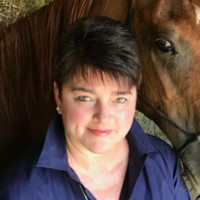
Mindy Patterson
Mark Patterson serves as Chief Executive Officer, and Mindy Patterson serves as President and Co-Founder of The Cavalry Group.
Established in 2010, The Cavalry Group is a national, member-based company that advocates for the constitutional and private property rights of law-abiding animal owners, animal-related businesses, sportsmen, and agricultural concerns. Its work includes legal protection, legislative advocacy, a voice for its members in legislatures nationally and locally, and defense against government rules inconsistent with the rule of law.
www.thecavalrygroup.com

Editorial and Legal Notice
Daisy and the Cypress Gate is a work of fiction inspired by true national and global events. In 2020, Americans were exposed to a globalist agenda to shut down houses of worship, destroy private family farms and ranches, self-sustaining homegrown gardens, and water management; seize land; transfer wealth; and infringe upon God-given human liberties enshrined in the First, Second, Fourth, Fifth, Sixth, and Fourteenth Amendments to the United States Constitution. This book was created as an educational platform to discuss faith, family, and the challenges facing the next generation of Americans as we head into the Golden Age and the age of superintelligence.
“Freedom is never more than one generation away.” — President Ronald Reagan
The book supports humane care, lawful ownership, peaceful advocacy, accurate evidence, a republican constitutional form of government, and stewardship under God’s commandments.
For legal questions about a real situation, consult a qualified lawyer who can review the facts and provide appropriate legal guidance.
Copyright © 2026 Alexander Penalta, Esq., Mark Patterson, and Mindy Patterson. All rights reserved.