

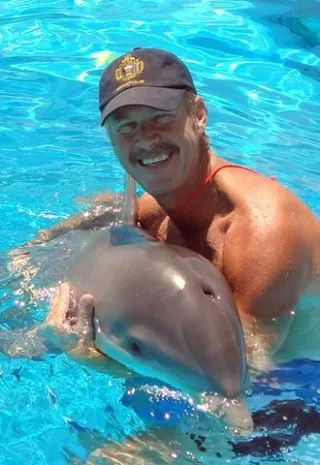
Dolphin Calf “WINTER” of Dolphin Tale (2011) being rehabilitated with a prosthetic tail at Mote Marine Laboratory and Aquarium
For decades, bottlenose dolphins (Tursiops truncatus) have fascinated humans with their intelligence, social bonds, and adaptability. Dolphin facilities—whether research, government, or zoological—often raise dolphins under structured care that includes regular feeding, veterinary support, and human interaction. While it might seem compassionate or “natural” to release these dolphins back into the ocean or a river system, the reality is far more complex. In fact, releasing dolphins raised under human care without extensive preparation can endanger their lives.
Lack of Survival Skills
Dolphins raised or kept long-term in human care are accustomed to receiving food from their trainers and do not learn the skills required to hunt live fish. In the wild, dolphins must echolocate prey, coordinate group hunting behaviors, and adapt to constantly changing conditions. A dolphin that has not been taught or allowed to refine these behaviors is at a severe disadvantage when suddenly placed in an open environment.
Immunity and Health Risks
Just like humans, dolphins raised in controlled environments can have different immune system exposures compared to wild counterparts. Releasing them into rivers or oceans exposes them to pathogens, parasites, and pollutants that their systems may not be prepared to handle. Conversely, releasing facility-raised dolphins may also introduce captive-related pathogens into wild dolphin populations.
Social and Territorial Challenges
Wild dolphin populations are structured around complex social hierarchies and territories. A facility-raised dolphin may lack the social integration skills or established bonds necessary to join a pod. Instead of acceptance, they may encounter aggression or isolation—further reducing survival chances.
Case Study: SPAWAR Dolphins—Buck, Luther, and Jake
In the 1990s, the U.S. Navy’s Space and Naval Warfare Systems Center (SPAWAR) conducted a controversial release of three bottlenose dolphins—Buck, Luther, and Jake—that had been part of its military dolphin program. The release was intended to test whether dolphins trained for military service could adapt to life in the wild.
- Buck: Tragically, Buck died shortly after release. He was unable to transition to wild feeding behaviors and succumbed to malnutrition and related complications.
- Luther: Luther survived but sustained injuries after release, underscoring the dangers facility-raised dolphins face when forced into unfamiliar and unforgiving conditions.
- Jake: Jake’s outcome highlighted the unpredictability of such experiments, as his adaptation remained inconsistent and fraught with challenges.
These examples illustrate that even strong, intelligent dolphins trained in specialized programs struggle to survive when abruptly removed from human care.
Ethical and Conservation Considerations
The deaths and suffering of Buck and Luther demonstrate the ethical responsibility facilities bear for the animals in their care. Releasing dolphins without comprehensive, long-term reintroduction training and monitoring is not only irresponsible but can be fatal. True conservation efforts focus on protecting wild dolphin habitats, mitigating pollution, and enforcing anti-poaching laws—rather than risking the lives of facility-raised dolphins by releasing them into environments for which they are unprepared.
Conclusion
While the idea of “freeing” dolphins may tug at the heartstrings, it is often more humane and ethical to ensure they live enriched, healthy lives under professional care. The tragic stories of Buck, Luther, and Jake serve as reminders that survival in the wild is not guaranteed—and that the well-being of dolphins raised in human care depends on careful stewardship, not impulsive release.